Faith and Suffering:

From A Chaplain’s Perspective

“Even though I walk through the valley of the shadow of death, I will fear no evil, for You are with me.” — Psalm 23:4

Suffering has a way of stopping us in our tracks. It interrupts our expectations, disrupts our sense of control, and forces us to confront the things we spend most of our lives avoiding: pain, loss, and the reality that we are not as self-sufficient as we imagined.

As a chaplain, I have learned that suffering is not something to solve but something to walk through. And we never walk it alone.

Suffering Is Not a Sign of Weak Faith.  Many people say, “If I just had more faith, I wouldn’t feel this way.”  But Scripture never promises that faith eliminates suffering. It promises that God is present in it.

Faith does not shield us from sorrow; it anchors us in it. Faith gives us the language to cry out, the courage to lament, and the hope that God is doing something in the wilderness we did not choose.

We tend to look for God in miracles, breakthroughs, and answered prayers.
But some of the deepest encounters with God happen in hospital rooms, at gravesides, in moments when our hearts feel pulled apart.

God is not distant from suffering; He steps into it. Jesus wept,Jesus grieved, and Jesus suffered.  A God who bleeds is not ashamed to sit with us in our pain.

The Ministry of Presence in a Hurting World

As chaplains, we don’t offer easy answers.  We don’t fix what cannot be fixed.  We offer presence.  Sometimes the most holy thing you can do is sit with someone who feels shattered and whisper, “You are not alone. God is near—even here, even now.”  Presence is not passive. It is deeply spiritual work. It is a reminder that love remains when words fail.

Suffering Can Become a Sacred Teacher. No one wants suffering.  But suffering often reveals what truly matters.  It teaches compassion.  It softens our judgments.  It reminds us that every person carries invisible wounds.   It turns our hearts toward God in ways comfort never does.  The question is never “Why is this happening?”  The deeper question is “How will I walk through this—and who will I become on the other side?”

A Prayer for Those in Pain

God of compassion,
Sit with those who suffer.
Hold close those who are grieving

Give strength to the weary,
and remind every hurting heart
that Your presence is steady,
Your love is near, and your grace is enough for today.
Amen.


Where is God?

Finding God in Ordinary Moments

“Surely the Lord is in this place, and I did not know it.”
— Genesis 28:16

We often imagine God showing up in dramatic ways working a miracle like parting seas, shaking mountains, speaking in thunder. But most of us will never see one of his miracles and yet, God is no less present.

More often than not, God meets us in the small, quiet, nearly invisible moments of our everyday lives. Moments we might overlook if we’re not paying attention.

Look for God in the Small Things

The ordinary is not empty, it is sacred ground.
A shared cup of coffee with a friend.
A sunrise on the way to work.
A breath taken during a stressful day.
The laughter of a child.
A stranger holding the door when you’re overwhelmed.

These are not interruptions in our spiritual life: They are our spiritual life.

God does not wait for us to get to church to speak. He often whispers through creation, through kindness, through stillness, and through the quiet rhythms of our routines.

Finding God in ordinary moments requires a shift in us, it is not working harder, but taking a moment to notice more around you. The world is beautiful, take in its natural beauty. 
Like Jacob waking from his dream, we often realize only afterward:
“God was here the whole time… and I missed it.”

When you open your eyes to seeing the sacred in the simple, the world becomes fuller, gentler, and more alive with the presence of God.

Spiritual life is not built on grand gestures but on daily awareness.
Being present. Breathing, Listening, and Receiving small mercies as gifts.

The ordinary becomes extraordinary when we see it with gratitude.

Holiness is not far away; it is near, waiting in the moments we rush past.

Reflection

Where might God be speaking to you in your daily life?
What small moment today might be an invitation to peace, gratitude, or hope?
Try pausing for just ten seconds and noticing the world around you and you may find God is already there.

I help people discover God’s presence not just in crisis, but in the quiet, ordinary places of life.  You don’t need a miracle to meet God; sometimes you just need a moment.

Grief Is Not a Problem to Be Solved:

Learning to Sit with Loss

“Blessed are those who mourn, for they will be comforted.”
Matthew 5:4

When someone we love is grieving, our instinct is to help, to find the right words, the right Bible verse, or the right solution. But grief is not a problem that needs solving. It is a wound that needs tending.  

As chaplains, one of the hardest and holiest lessons we learn is that our presence can be more healing than our answer

Grief can make people feel lost in a world that has suddenly stopped making sense.   They may question God, faith, or even their own identity.  And in that confusion, what helps most is not explanation, but presence and listening.

When you sit with someone in silence, holding space for their pain, you are bearing witness to their love. You’re saying, “You’re not alone. I’m here.”

That’s what chaplaincy looks like, not fixing grief, but walking through it together.

It’s tempting to think faith should erase our sorrow. But Scripture shows the opposite: even Jesus wept at the tomb of His friend.  Grief is not the absence of faith; it is the expression of love.  You grieve deeply because you loved deeply and that love becomes the path toward healing.

The tears we shed in sorrow are often the first prayers of our recovery.

To “sit with loss” means to resist the urge to rush healing. It means allowing time, honesty, and compassion to do their quiet work. Everyone’s grief process is different, some days are easier than others.  Sometimes healing begins not in a sermon or a solution, but in the courage to simply be present in pain.

If we can offer anything as chaplains, it’s this: the reminder that you are seen, your grief is valid, and comfort does come… even if slowly.

Chaplains walk with individuals and families through loss, grief, and transition.
Our mission is not to fix pain, but to accompany you through it and offer spiritual care, presence, and hope in the midst of sorrow.

If you’re grieving, you don’t have to face it alone.

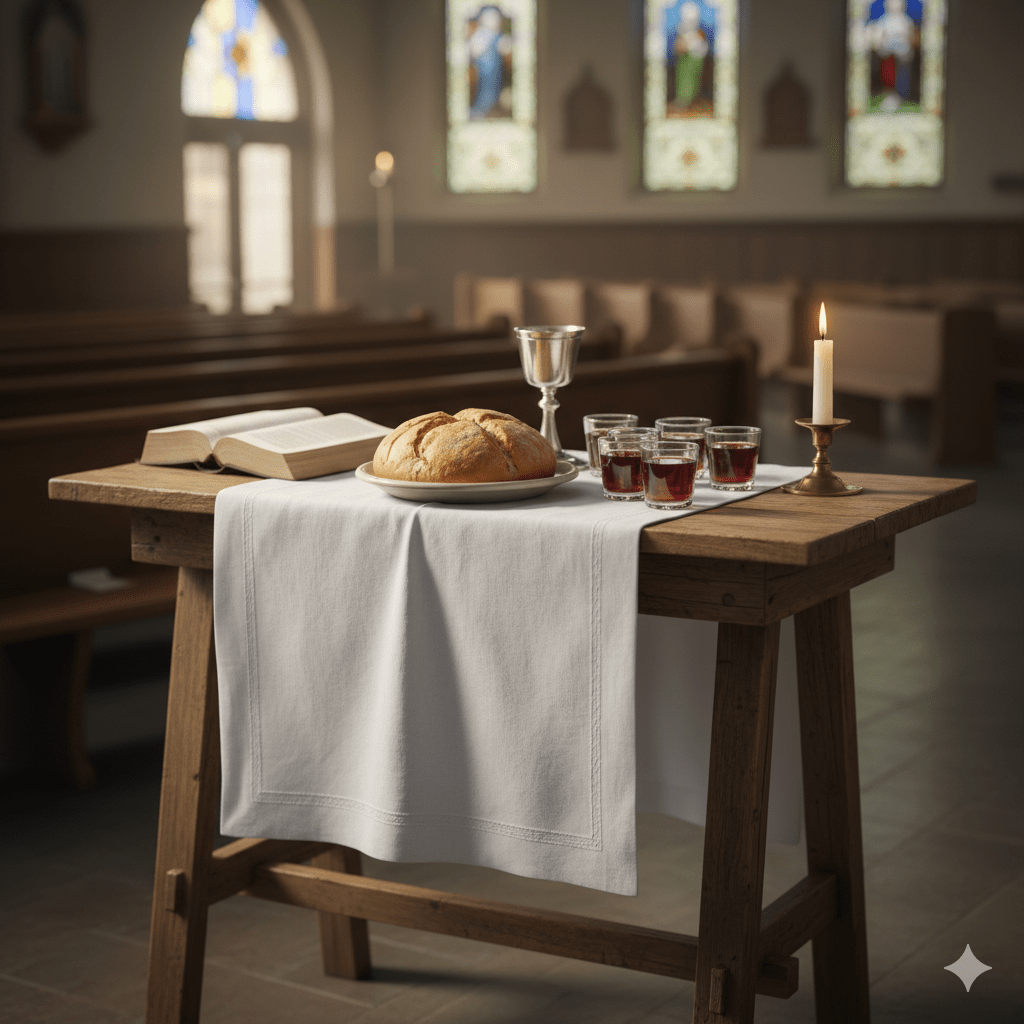
The Table of Christ Has No Reserved Seats

“Then Levi held a great banquet for Jesus at his house, and a large crowd of tax collectors and others were eating with them.” — Luke 5:29

Jesus didn’t eat with the righteous. He shared meals with those the religious world called sinners. He sat down with the excluded, the scandalized, and the misunderstood. And in doing so, He revealed something radical about the Kingdom of God: there are no reserved seats at His table.

When Jesus called Levi, a tax collector despised by his community, He didn’t first demand repentance, right belief, or moral reform. He simply said, “Follow Me.” (Luke 5:27) That invitation shattered the religious expectations of the day  and it still does.

Too often, the modern church has forgotten this. We’ve turned the open table of Christ into a gated community, by deciding who is “worthy” to belong. LGBTQ believers, divorced people and those with doubts.  All too often they  hear a subtle message: “you can sit near the table, but not at it.” That is, if they are even invited at all.  

But the Gospel says otherwise.
At Jesus’ table, belonging comes before behavior. Love precedes labels. Grace comes before growth.  Everyone is free and deserves to hear the Gospel.  

When Christ broke bread, He wasn’t just offering a meal; He was proclaiming a new world order, one where every person bears the image of God and is welcomed as family. The table is not for the pure, but for the hungry.

If the church wants to be Christlike, it must reclaim that radical hospitality. The mission of the Gospel is not to guard the table, but to set more places.

As a chaplain, I’ve learned that presence matters more than perfection. People don’t need to be fixed before they can be loved. They need to be loved before they can heal. And in every encounter; whether in hospitals, homes, or streets, I see Christ pulling out another chair.

So if you’ve ever been told you don’t belong, please know this: Jesus already saved you a seat.
There are no reservations in the Kingdom. There is only grace.

Prayer

Lord Jesus, break down the walls that divide us.
Teach us to welcome as You welcomed and to love without reservation,
to set tables of grace where all may be fed. Amen.