Why a Chaplain’s Presence Matters

The Ministry of Presence:

“So do not fear, for I am with you; do not be dismayed, for I am your God. I will strengthen you and help you; I will uphold you with my righteous right hand.” -Isaiah 41:10

There is a quiet kind of ministry that rarely makes headlines and often goes unnoticed by everyone except the person who needs it most. It’s the ministry of presence, showing up, staying near, and bearing witness to another person’s story with compassion and steadiness.

For chaplains, presence is not merely a technique. It is the heart of the vocation.

Presence says, “you are not alone.”  Most people don’t remember the exact words a chaplain says. But they remember that someone was with them.

Presence disrupts isolation. It offers grounding when life becomes disorienting, whether at a hospital bed, a workplace, a fire station, a kitchen table, or a late-night phone call.

In a world that glorifies productivity and speed, presence gives something rare: unhurried attention.

This presence makes space for God.  A chaplain does not bring God into a room; God is already there. However, presence helps people notice God in the midst of their fear, grief, or confusion.

This is called the hiddenness of God; God at work beneath the surface of ordinary encounters.  I  believe that every Christian, in everyday life, could be a bearer of God’s comfort simply by living faithfully, humbly, and attentively.

A chaplain’s presence creates the conditions where the sacred becomes visible.

It is this presence that slowly builds trust.  Trust doesn’t come from impressive credentials or perfect answers.  It grows from consistency.

People open up when they know:

  • You are not rushing them
  • You are not judging them
  • You are not trying to fix them
  • You are not pushing an agenda

Presence communicates safety.  When people feel safe, they can speak truthfully about their doubts, their faith, their guilt, their hopes and in that honesty, healing begins.

This presence honors the dignity of every person.  Chaplains meet people in vulnerable moments—when defenses are low and emotions run raw. Presence honors humanity without demanding anything in return.

It says:

“Your story matters.
Your pain is real.
Your life has worth.”

This is holy ground.

Presence eliminates the need for the perfect words.  Many chaplains worry about what to say. But often the most faithful thing is to say very little.

A hand on a shoulder. A quiet prayer.  A gentle question.  A shared moment of silence.

Kierkegaard reminds us that “purity of heart is to will one thing.”  In chaplaincy, that one thing is love and love expressed through attention, listening, and presence.

Christ’s ministry was deeply relational. He walked beside people, shared meals, entered homes, and lingered long enough to see people as they truly were.

Chaplains follow this pattern, not as saviors, but as companions.

Showing up is the most powerful way to make compassion real. It brings a sense of calm to someone’s hardest moments

A chaplain’s presence does not solve every problem. But it changes the atmosphere of suffering. It helps people breathe again.  It gives strength for the next step.

Presence is ministry.
Presence is compassion.
Presence is hope made tangible.

And sometimes the most sacred work a chaplain can do is simply to show up and stay.

Kierkegaard- Matthew 6:24-34

“What We Can Learn from the Birds and The Lilies”

  1.  Kierkegaard Background

Søren Aabye Kierkegaard (1813–1855) was a Danish philosopher and theologian who was widely considered the father of existentialism. He was the author of many works that often focused on the human condition, which included concepts like anxiety, despair, faith, and individual existence.  Kierkegaard was brought up within the official state church, the Lutheran Church of Denmark.  Soren’s father raised him strictly Lutheran Orthodox and passed on his son (?) guilt and melancholy.  “His father was obsessed by guilt at the memory of having as a young boy cursed God.” (Auden, 1966, 3), this he believed had cursed the family.  His father had died while he was engaged in his theological studies at the University of Copenhagen, though this made him deeply saddened, he continued and got his master’s degree. His mother, though he did not write much about her, was important in his life.  She originally came from a lower class social background and Soren felt a serious connection to her. Meanwhile, Kierkegaard was still searching for his purpose which happened to change course when he fell in love and got engaged to Regine Olsen.  He had loved Regine too much and didn’t want his melancholy to affect her.  He felt that he was unfit for marriage and felt that his inner struggles would hurt her.  

 In 1845, with Regine in his thoughts, he wrote the Stages of Life where he examined life into three parts: the aesthetic, the ethical, and the religious.  He further explained these stages in his Christian Discourses, where he uses the parable from Matthew 6:24-34 of the birds and the lilies, which happens to be the focus of this paper.  

  1.  Introduction

In his Christian Discourses, Kierkegaard uses a bible verse from Matthew to mimic our human life through the analogies of the lilies and the birds.  In the case of the lily, he was perfectly fine living next to the beautiful stream until a bird came flying down and put different thoughts into his head.  Tempting him with a tale of a beautiful field full of lilies living together in happiness.  This made the lily feel lonely and second guess his own living situation.  The bird offered to uproot the lily and fly him to the field to be with the others. Once his anxiety was so great and he could not help himself, he took the bird up on his offer.   However, on the flight to his new residence, the lily began to wilt and perished before reaching his goal.  In the second story of the wood pigeon, she was happy collecting food for just what she needed for that day, completely content with never a worry.  Until one day she met some tame doves who lived on a rich farm, who told her stories of how they never have to worry about food and have plenty saved up and will never starve.  The wood pigeon became envious of them and began to worry about her food supply and came up with a plan.  She would sit with the tame pigeons overlooking the farm and at the end of the day fly into their coop with them.  However, the farmer noticed the strange pigeon and put her in a separate cage.  The next morning, she was killed by the farmer.  Kierkegaard uses these analogies of the lilies and birds as teachers of silence, obedience, and trust as the path to overcoming human anxiety through a true and personal relationship with God. These bible verses “show that we are not supposed to be self-sufficient but we are summoned to trust God ‘with a whole undivided heart.”(Silva, 2016, 28) It is our faith and trust in God that will relieve our anxieties.  These discourses reflect his three stages of life which will be explained in detail throughout this paper. 

  1. The Aesthetic Stage, (Silence and Beauty)

Kierkegaard defines the first of three stages of life: the aesthetic life as being devoted to pursuing immediate gratification and avoiding boredom.  We search for passive enjoyment and are never satisfied; we are always looking for the next best thing.  In the analogy of the lily, he was perfectly happy with the beauty of his surroundings and living with silence; there was only the beautiful sound of the stream.  He was perfectly content and satisfied with his being; he had everything he needed to sustain his life.   According to Kierkegaard the bird is living on his daily bread, not too little, not too much, just what God provides him.  “Here it appears that the bird is a teacher: it is such a situation that to judge by the outward condition, one must call it poor, and yet it is not poor.” (Kierkegaard, 1974, 17-18) He was not poor at all, perfectly content, that is until the bird put alternative thoughts in his head.  At this point the lily was in the aesthetic stage where he began to be bored with his surroundings and looking for something better.  Could the bird represent a challenge or lesson from God as a way to test the lily’s faith, or create a path toward the next stage of life? The lily compares its current existence with something he now believes is a better experience. Because of this, he had developed an uncontrollable anxiety that would ultimately lead to his demise.  The same would be true for the wood pigeon, she was perfectly content collecting and eating that day’s daily bread.  It was not until the tame pigeons began to brag about not having to ever worry about collecting food and that they will always be provided for.  In comparing herself to the other pigeons her anxiety began to build for an easier life which ultimately led to her death.  

“All worldly anxiety has its basis in human beings being unwilling to be content with being human and, under the influence of comparison, becoming anxiously desirous of being different in some way.” (Kierkegaard, 2010, 99)

According to Kierkegaard both the pigeon and the lily are models of quiet trust in God.  “But what does this silence express? It expresses respect for God, for the fact that it is he who rules and he alone to whom wisdom and understanding belong.” (Kierkegaard, 2016, 29) They both existed in the present, finding their contentment in the simple things and in each moment.  It was when they became affected by outside influences, they began comparing themselves to others and the lily and the bird were tempted by a new easier life, they began to live the aesthetics’ life of the relentless quest for new pleasures to help avoid boredom.  At this time, they became distraught with their current life and anxious about finding a better one.  They both lost their trust in God’s ability to provide for them. 

  1. The Ethical Stage (Obedience and Purpose)

According to Kierkegaard the transition from the aesthetic stage to the ethical stage, the “leap” is a matter of choice.  The aesthetic stage is unsustainable; the continuous pursuit of pleasure and new sensory experiences eventually leads to boredom and emptiness.  A person at this stage chooses to live a life according to duty and the universal ethical principles. However, one begins to realize how hard it is to live by these demands of moral law and eventually it leads to guilt and despair.  Kierkegaard believes that at this point our failures can only lead to only one thing, a personal relationship with God.  Like the two parables, both the lily and the pigeon had total trust and obedience to God.  They never had anxiety or had to worry about food, their “daily bread”, because they knew God would provide.  Kierkegaard says that the true Christian believes God will always provide and it is the heathen that worries about such things. 

“In comparison with the ungodly melancholy of the heathen, the bird, which poverty is without the anxiety of poverty, is care-free; in comparison with the pious faith of the Christian, the carefreeness of the bird in the light-mindlessness.” (Kierkegaard 1974, 25)

For the birds and the lilies do not worry about their circumstances, their next meal or their future, they simply exist in the current moment, trusting God.  It is this trust that Kierkegaard presents as the model for human life. 

  1. The Religious Stage (Joy and Surrendering to God)

Lastly there is the final stage, Kierkegaard considers it the highest and most difficult of the three stages to achieve. He argues that human anxiety occurs when humans are caught between two conflicting powers: the world and God and good and evil.  It is having to make a choice that causes conflict and worry, which is the root of human existence. This stage requires you to be your authentic self by taking a “leap of faith” and developing a personal relationship with God. Kierkegaard states that this form of true obedience requires us to be silent and forget our own plans and to open ourselves to God’s will and plan. This relationship will rise above any pursuit of pleasure and the following of universal morals.  For Kierkegaard this is what it means to be a true Christian.  

“But the lowly Christian does not walk into the snare of optical illusion, he sees with the eyes of faith, and with the swiftness of the faith that seeks God he is at the beginning, he himself before God, content with being himself.” (Kierkegaard, 1974, 42)

The difficulty at this stage is absolute obedience to God, embracing the absurd and irrational.  This is the example the birds gave us in the Gospel of Matthew, they were completely content with their life and never had to worry about where their next meal would come from.  They had absolute obedience and belief in God to provide their “daily bread.”  The lily and the bird live in the moment and are free from any torment over life’s possibilities.  For Kierkegaard it is faith, obedience and a commitment to God that relieves our anxieties.   The belief that God will take care of any needs we may face. This is the ultimate goal in life, to achieve this state of belief and joy that does not depend on any external circumstances, only to have faith.  

  1. Conclusion

What can we learn from the bird and the lily?  Kierkegaard interpretation of Christ’s teachings is still relevant in today’s society, it is a reminder for us to not get anxious with things that are out of our control.  As we learned from the fable, we can not live our lives in comparison to others and we need to accept our own imperfections.  It shows us through the example of the bird and the lily, how to live a life of silence and obedience and to trust in God’s plan for us.  They had developed a deep respect for God’s sovereignty and acknowledged him as the only source of wisdom and understanding.  “Just as God has called us to greater righteousness, a broader love, and a deeper piety, he calls us to trust in his provision by seeking him first in faith.” (Silva, 2016, 32)  The lily and bird were silent and did not question Him.  They had full trust in God to provide for them and never had to live with anxiety.  Kierkegaard’s message for us is that peace is not found in escaping anxiety; it is found in having a true relationship with God through being humble and having trust.  If God provides for the lily and bird, he will surely provide for us.  

“Therefore, I tell you, do not be anxious about your life, what you will eat or what you will drink, nor about your body, what you will put on.  Is not life more than food, and the body more that clothing?” – Matthew 6:25

Faith and Suffering:

From A Chaplain’s Perspective

“Even though I walk through the valley of the shadow of death, I will fear no evil, for You are with me.” — Psalm 23:4

Suffering has a way of stopping us in our tracks. It interrupts our expectations, disrupts our sense of control, and forces us to confront the things we spend most of our lives avoiding: pain, loss, and the reality that we are not as self-sufficient as we imagined.

As a chaplain, I have learned that suffering is not something to solve but something to walk through. And we never walk it alone.

Suffering Is Not a Sign of Weak Faith.  Many people say, “If I just had more faith, I wouldn’t feel this way.”  But Scripture never promises that faith eliminates suffering. It promises that God is present in it.

Faith does not shield us from sorrow; it anchors us in it. Faith gives us the language to cry out, the courage to lament, and the hope that God is doing something in the wilderness we did not choose.

We tend to look for God in miracles, breakthroughs, and answered prayers.
But some of the deepest encounters with God happen in hospital rooms, at gravesides, in moments when our hearts feel pulled apart.

God is not distant from suffering; He steps into it. Jesus wept,Jesus grieved, and Jesus suffered.  A God who bleeds is not ashamed to sit with us in our pain.

The Ministry of Presence in a Hurting World

As chaplains, we don’t offer easy answers.  We don’t fix what cannot be fixed.  We offer presence.  Sometimes the most holy thing you can do is sit with someone who feels shattered and whisper, “You are not alone. God is near—even here, even now.”  Presence is not passive. It is deeply spiritual work. It is a reminder that love remains when words fail.

Suffering Can Become a Sacred Teacher. No one wants suffering.  But suffering often reveals what truly matters.  It teaches compassion.  It softens our judgments.  It reminds us that every person carries invisible wounds.   It turns our hearts toward God in ways comfort never does.  The question is never “Why is this happening?”  The deeper question is “How will I walk through this—and who will I become on the other side?”

A Prayer for Those in Pain

God of compassion,
Sit with those who suffer.
Hold close those who are grieving

Give strength to the weary,
and remind every hurting heart
that Your presence is steady,
Your love is near, and your grace is enough for today.
Amen.

Where is God?

Finding God in Ordinary Moments

“Surely the Lord is in this place, and I did not know it.”
— Genesis 28:16

We often imagine God showing up in dramatic ways working a miracle like parting seas, shaking mountains, speaking in thunder. But most of us will never see one of his miracles and yet, God is no less present.

More often than not, God meets us in the small, quiet, nearly invisible moments of our everyday lives. Moments we might overlook if we’re not paying attention.

Look for God in the Small Things

The ordinary is not empty, it is sacred ground.
A shared cup of coffee with a friend.
A sunrise on the way to work.
A breath taken during a stressful day.
The laughter of a child.
A stranger holding the door when you’re overwhelmed.

These are not interruptions in our spiritual life: They are our spiritual life.

God does not wait for us to get to church to speak. He often whispers through creation, through kindness, through stillness, and through the quiet rhythms of our routines.

Finding God in ordinary moments requires a shift in us, it is not working harder, but taking a moment to notice more around you. The world is beautiful, take in its natural beauty. 
Like Jacob waking from his dream, we often realize only afterward:
“God was here the whole time… and I missed it.”

When you open your eyes to seeing the sacred in the simple, the world becomes fuller, gentler, and more alive with the presence of God.

Spiritual life is not built on grand gestures but on daily awareness.
Being present. Breathing, Listening, and Receiving small mercies as gifts.

The ordinary becomes extraordinary when we see it with gratitude.

Holiness is not far away; it is near, waiting in the moments we rush past.

Reflection

Where might God be speaking to you in your daily life?
What small moment today might be an invitation to peace, gratitude, or hope?
Try pausing for just ten seconds and noticing the world around you and you may find God is already there.

I help people discover God’s presence not just in crisis, but in the quiet, ordinary places of life.  You don’t need a miracle to meet God; sometimes you just need a moment.

Grief Is Not a Problem to Be Solved:

Learning to Sit with Loss

“Blessed are those who mourn, for they will be comforted.”
Matthew 5:4

When someone we love is grieving, our instinct is to help, to find the right words, the right Bible verse, or the right solution. But grief is not a problem that needs solving. It is a wound that needs tending.  

As chaplains, one of the hardest and holiest lessons we learn is that our presence can be more healing than our answer

Grief can make people feel lost in a world that has suddenly stopped making sense.   They may question God, faith, or even their own identity.  And in that confusion, what helps most is not explanation, but presence and listening.

When you sit with someone in silence, holding space for their pain, you are bearing witness to their love. You’re saying, “You’re not alone. I’m here.”

That’s what chaplaincy looks like, not fixing grief, but walking through it together.

It’s tempting to think faith should erase our sorrow. But Scripture shows the opposite: even Jesus wept at the tomb of His friend.  Grief is not the absence of faith; it is the expression of love.  You grieve deeply because you loved deeply and that love becomes the path toward healing.

The tears we shed in sorrow are often the first prayers of our recovery.

To “sit with loss” means to resist the urge to rush healing. It means allowing time, honesty, and compassion to do their quiet work. Everyone’s grief process is different, some days are easier than others.  Sometimes healing begins not in a sermon or a solution, but in the courage to simply be present in pain.

If we can offer anything as chaplains, it’s this: the reminder that you are seen, your grief is valid, and comfort does come… even if slowly.

Chaplains walk with individuals and families through loss, grief, and transition.
Our mission is not to fix pain, but to accompany you through it and offer spiritual care, presence, and hope in the midst of sorrow.

If you’re grieving, you don’t have to face it alone.

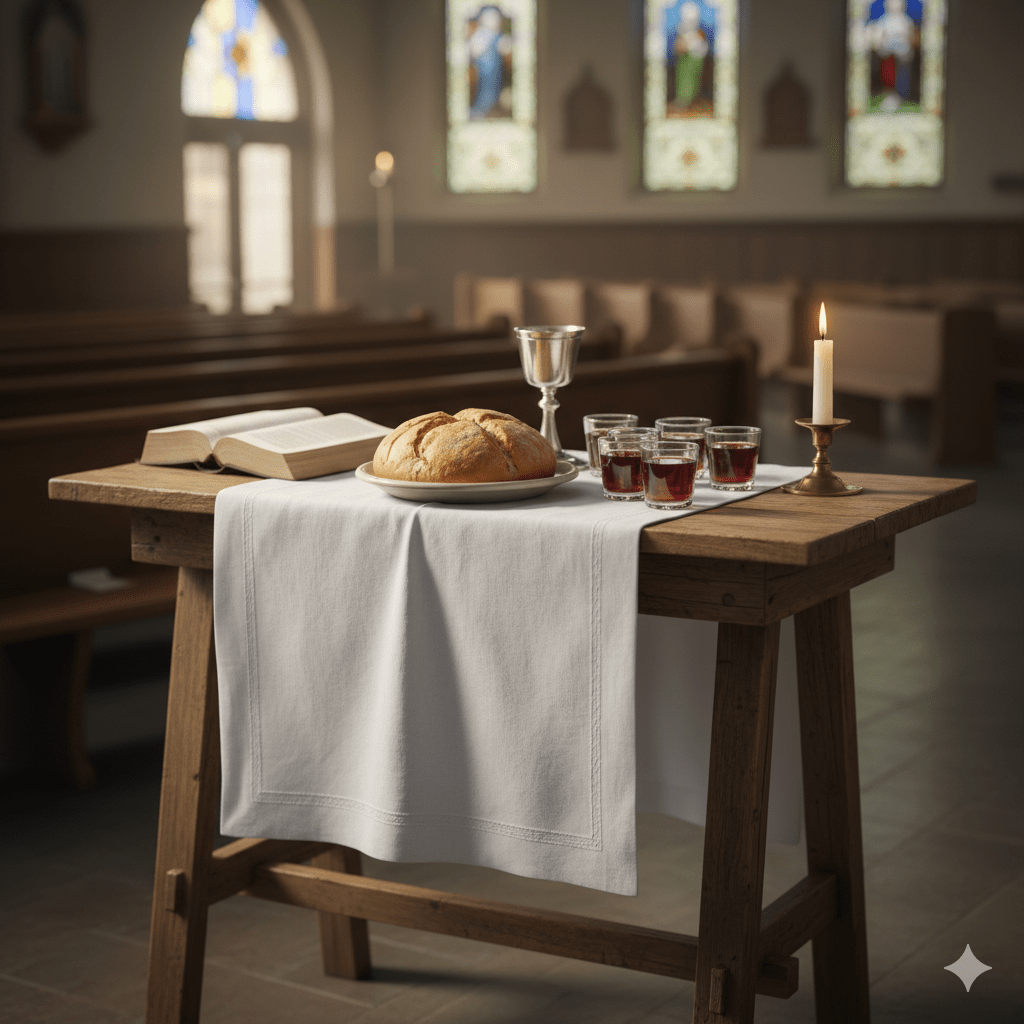
The Table of Christ Has No Reserved Seats

“Then Levi held a great banquet for Jesus at his house, and a large crowd of tax collectors and others were eating with them.” — Luke 5:29

Jesus didn’t eat with the righteous. He shared meals with those the religious world called sinners. He sat down with the excluded, the scandalized, and the misunderstood. And in doing so, He revealed something radical about the Kingdom of God: there are no reserved seats at His table.

When Jesus called Levi, a tax collector despised by his community, He didn’t first demand repentance, right belief, or moral reform. He simply said, “Follow Me.” (Luke 5:27) That invitation shattered the religious expectations of the day  and it still does.

Too often, the modern church has forgotten this. We’ve turned the open table of Christ into a gated community, by deciding who is “worthy” to belong. LGBTQ believers, divorced people and those with doubts.  All too often they  hear a subtle message: “you can sit near the table, but not at it.” That is, if they are even invited at all.  

But the Gospel says otherwise.
At Jesus’ table, belonging comes before behavior. Love precedes labels. Grace comes before growth.  Everyone is free and deserves to hear the Gospel.  

When Christ broke bread, He wasn’t just offering a meal; He was proclaiming a new world order, one where every person bears the image of God and is welcomed as family. The table is not for the pure, but for the hungry.

If the church wants to be Christlike, it must reclaim that radical hospitality. The mission of the Gospel is not to guard the table, but to set more places.

As a chaplain, I’ve learned that presence matters more than perfection. People don’t need to be fixed before they can be loved. They need to be loved before they can heal. And in every encounter; whether in hospitals, homes, or streets, I see Christ pulling out another chair.

So if you’ve ever been told you don’t belong, please know this: Jesus already saved you a seat.
There are no reservations in the Kingdom. There is only grace.

Prayer

Lord Jesus, break down the walls that divide us.
Teach us to welcome as You welcomed and to love without reservation,
to set tables of grace where all may be fed. Amen.

What If the Church Looked More Like Jesus?

“When He saw the crowds, He had compassion on them, because they were harassed and helpless, like sheep without a shepherd.” — Matthew 9:36

What if the church looked more like Jesus?
Not like a brand, a building, or a belief system, but like the living Christ who walked among the broken, the doubting, and the outcast.

When Jesus saw people hurting, He didn’t lecture them. He didn’t ask for credentials or moral records. He was moved with compassion. That’s the word the Gospels use over and over-compassion. Not fear, not suspicion, not superiority and not judging.

Somewhere along the way, the church began to lose that center. We became gatekeepers of grace instead of its messengers. We drew up statements of who’s welcome, who’s not, who’s “biblical” enough, who’s “repentant” enough—forgetting that none of us came to the table by merit.  There is no unforgivable sin.  

If the church truly looked like Jesus, it would not be known for who it excludes but for who it embraces. It would welcome the ones religion has turned away: the LGBTQ believer longing to belong, the divorced parent trying to rebuild, the doubter who still shows up to pray.

Jesus did not come to start a club for the clean. He came to build a home for the broken.

And that home still stands open.

When the church begins to look like Jesus again; when it chooses compassion over correctness, presence over pride, and grace over gatekeeping, it will rediscover its power. The world doesn’t need a louder church; it needs a kinder one. A church that sees people the way Jesus saw them: harassed and helpless, like sheep without a shepherd.

To look like Jesus means to love without exception. To heal instead of divide. To feed the hungry, clothe the lonely, and lift the ones who’ve been told they don’t belong.

That’s not compromise; it’s the Gospel.

Prayer

Lord, help us to look like You.
Let our hearts be moved with compassion where there is judgment,
mercy where there is fear,
and welcome where there has been exclusion.
Make Your church a reflection of Your love. Amen.

Lessons from Kierkegaard

The Absurdity of Hope:

“Against all hope, Abraham believed.” — Romans 4:18

Søren Kierkegaard called faith “a leap into the absurd.” Not because it is irrational, but because it dares to believe when every rational reason has vanished. Hope, for Kierkegaard, is not optimism. It’s not wishful thinking or the naive belief that things will work out. Hope is absurd because it stands firm precisely when circumstances declare defeat.

Kierkegaard’s classic Fear and Trembling tells the story of Abraham, who believed God’s promise even as he prepared to sacrifice his son Isaac. For Kierkegaard, Abraham’s faith is absurd, believing the impossible and choosing to have trust in God. In a world that says, “There’s no way forward,” faith whispers, “Nevertheless.”

True faith doesn’t rest on outcomes; it rests on the God who transcends them.

In the modern world, we often reduce hope to probability. We say things like, “I hope it works out,” as if hope depends on the odds. Kierkegaard challenges that. Hope rooted in God exists beyond the odds. It’s not a calculation, it’s an act of trust.

To hope in the face of despair is not denial; it is discipleship.

The cross is the ultimate symbol of absurd hope. The Son of God, crucified and yet, through that death, the world is redeemed. This is the pattern of Christian hope: life born from death, light from darkness, resurrection from the tomb.

Kierkegaard wrote, “Without risk, there is no faith.” Hope always risks disappointment. But that very risk is what makes hope holy.

For the chaplain, the caregiver and the believer hope often looks absurd. We stand with the dying and proclaim resurrection. We listen to the hopeless and speak of love. We pray for peace in a violent world. Yet it is in these moments that faith burns brightest.

Hope is not the denial of reality; it is the courage to believe that God’s reality runs deeper.

In closing, Kierkegaard teaches us that the absurdity of hope is not its weakness, it is strength. To hope absurdly is to live as Abraham lived, trusting God when the promise seems impossible.

“Faith is the highest passion in a human being. Many in every generation may not come that far, but none comes further.” — Søren Kierkegaard

When God Feels Silent: 

How to Find Faith in Doubt

“for we walk by faith, not by sight” 

-2 Corinthians 5:7  

As believers we have not seen proof of resurrection and glorification with their own eyes. However, Paul encourages us to live by faith and to confidently expect God to do what He promised in Christ.          

There are seasons in faith when God feels far away; when prayer seems to be forgotten and the comfort we once felt goes quiet. These are the moments when we start to ask: “Where are You, God?”

If you’ve ever felt this way, you are not alone. Even the saints and prophets knew the ache of divine silence. The Bible is full of people who wrestled with absence — and still chose to trust.

Silence Is Not Absence

When God feels silent, it’s easy to believe we’ve been abandoned. But silence does not mean absence.
Sometimes, God’s quiet is an invitation — a space where faith deepens beyond feelings.

Kierkegaard called faith a “leap into the absurd”  believing even when reason falters, trusting when proof is gone. That’s the essence of mature faith: not constant reassurance, but steady trust in the unseen. Faith involves a risk-taking element, as one must act without certainty of success or rational justification

God may be silent, but He is not still. The silence itself can become sacred ground, a place where we learn to listen differently, to sense His presence not in words but in the quiet strength that keeps us standing.

Faith Beyond Feelings

In the noise of our world, silence can feel like punishment. But sometimes, silence is where God whispers most clearly.
When answers don’t come, we can still cling to what we know of God’s heart, His goodness, His mercy, His faithfulness through every storm.

Faith is not the absence of doubt. It is the decision to trust even when we do not understand

Reflection

Are you walking through a silent season?
Instead of striving to hear something new, rest in what you already know: God’s love has not left you.
Sometimes the silence is where He strengthens your soul to stand on its own and not apart from Him, but deeper in Him.

I understand that faith isn’t always easy. If you’re struggling with silence, doubt, or distance from God, you don’t have to face it alone.

A chaplain can walk with you through the quiet places of faith to help you find peace, purpose, and hope in the midst of uncertainty.

How Chaplains Help People

People of All Faiths (and No Faith)

“Let us not love with words or speech but with actions and in truth.”
— 1 John 3:18

One of the most misunderstood parts of chaplaincy is the idea that a chaplain serves only people who share their faith. In reality, a chaplain’s calling is broader and deeper — to meet every person where they are, no matter their belief, background, or doubt.

Chaplains are not gatekeepers of religion; we are companions of the soul.
Our ministry is one of presence, compassion, and care which is freely offered to anyone who is hurting, searching, or simply human.

Meeting People Where They Are

In hospitals, workplaces, homes, schools, and communities, chaplains walk beside people from every walk of life.
We pray with those who believe and sit in silence with those who do not. We listen to stories of faith, fear, and grief without judgment or agenda.

A chaplain’s question is never, “What do you believe?”
It is always, “How are you doing — really?”

That question opens a sacred space. It says, “Your story matters. You matter. I am here for you. You are not alone. 

Love Without Barriers

Jesus often met people who stood outside the walls of religion:  the sick, the doubting, the outcast and He loved them first.
That is the model of chaplaincy: love without condition, care without boundaries, hope without any prerequisites.

The presence of love often speaks louder than the language of doctrine.

Reflection

Is there someone in your life who sees the world differently than you?

What would it look like to simply listen; not to persuade, but to understand?
That, too, is a form of ministry.

When we love without labels, we reflect the heart of God, who is the One who meets us all in grace.I serve people from all walks of life — believers, seekers, and skeptics alike.


My mission is simple: to offer spiritual care through compassion, presence, and understanding. To me, every story is sacred.